Dr. Grigori Fursin: bio and CV
Understanding Complex Systems. Building Them to Adapt to a Changing World.
Vice President, Head of Dapple Labs — Research & Systems Strategy at Dapple | Interdisciplinary AI systems scientist and hands-on systems architect | Research on adaptive, self-optimizing, and resource-efficient computing; full-stack software–hardware co-design; reproducible R&D; knowledge engineering; and compute economics
For more than three decades, I have followed one practical question: how can we understand—and improve—the physics, engineering, and economics of intelligent computing so that complex systems remain efficient, useful, and adaptive as workloads and technologies change? I connect first-principles research, hands-on engineering, reproducible experimentation, and business realities to turn emerging ideas into working systems and help organizations evaluate and adopt deep technology while reducing cost, risk, and wasted effort.
[ Summary ] [ Bio ] [ CV ] [ Highlights ] [ Current focus ] [ Career ] [ Software ] [ Talks & publications ] [ Community ]
Detailed bio
I am an interdisciplinary AI systems scientist, hands-on systems architect, R&D leader, entrepreneur, educator, and advocate for open and reproducible research. My long-term aim is to understand—and improve—the physics, engineering, and economics of intelligent computing: how algorithms, models, software, hardware, data, infrastructure, people, and costs interact, and how the resulting systems can learn and adapt under real-world requirements and constraints.
The apparent breadth of my career is not a collection of unrelated interests. It is the result of repeatedly following the real bottlenecks. When an algorithm depended on software, I worked on the software. When software behaviour depended on hardware, I studied the hardware. When good results could not be reproduced or transferred, I worked on experimental methodology, automation, and shared knowledge. When technical improvements did not produce useful outcomes, I investigated deployment, organizational, and economic constraints.
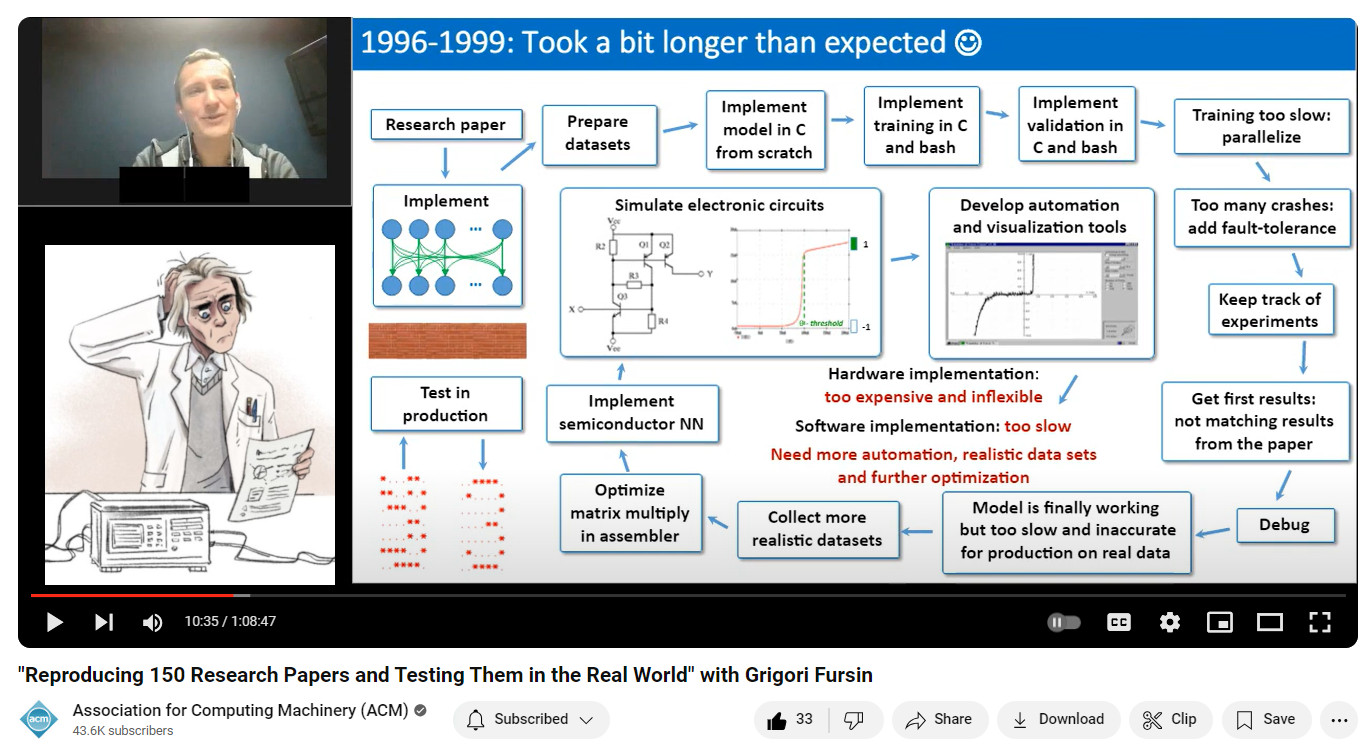
My journey began with a childhood fascination with intelligence, robotics, and science fiction. In the mid-1990s, while studying electronics, mathematics, and computer engineering, I co-designed a Hopfield-based analog semiconductor neural network from scratch. The work covered models, training, datasets, software, circuit simulation, physical hardware, benchmarking, and low-level optimization. It taught me that making an intelligent system useful in reality is an interdisciplinary, multi-objective systems problem rather than an isolated algorithmic problem.
During my PhD in self-optimizing compilers and systems at the University of Edinburgh and subsequent research at Inria, I pioneered machine-learning-guided compiler optimization, adaptive runtime systems, collective tuning, and data-driven software–hardware co-design. This work produced MILEPOST GCC and cTuning and later received ACM/IEEE Test of Time Awards in 2017 and 2025. It also established a pattern that continues in my work today: observe real system behaviour, expose choices and constraints, learn from experiments, and adapt decisions to each workload and environment rather than searching for one universally optimal configuration.
The difficulty of reproducing and reusing experimental results became the next bottleneck. I founded cTuning.org and the cTuning Foundation, where I remain Chief Scientist. I also helped develop artifact-evaluation and reproducibility practices for ACM and IEEE conferences and authored a unified Artifact Appendix and checklist adopted and extended by major systems venues. Experience helping reproduce results from more than 150 research papers led me to create Collective Knowledge, Collective Mind, and the Common Meta Framework (cMeta/cX): an evolving family of open frameworks for turning ad hoc experiments into portable components, workflows, evidence, and reusable knowledge.
I then carried these ideas across academic research, open-source communities, commercial engineering, and startups. I co-founded and served as CTO of dividiti; built the Collective Knowledge / cKnowledge.io platform, which was acquired by OctoAI; and later served as Vice President of MLOps at OctoAI. As a Founding Member of MLCommons through the cTuning Foundation, I developed automation that helped the community produce more than 10,000 reproducible MLPerf results across diverse systems. I subsequently led AI systems R&D at FlexAI and advised Lumai on software–hardware co-design and performance modelling for emerging optical AI acceleration. Across these roles, I continued working hands-on while building teams, research programs, communities, products, and bridges between scientific ideas and business outcomes.
I am now Vice President, Head of Dapple Labs, leading research and systems strategy at Dapple. Dapple is building the Enterprise OS Cloud for organizations that need dedicated, reliable, and controlled AI infrastructure. I lead research on reproducible evidence, continuous benchmarking and learning, workload–system matching, performance and cost modelling, and full-stack software–hardware–infrastructure co-design. This is a natural continuation of my earlier work, now connected to production workloads, heterogeneous data centers, operational constraints, and real economics.
I also founded cTuning Labs as a long-term home for open tools, education, reproducible methods, and shared knowledge. Its cTuning.ai platform is the next generation of my Collective Knowledge, Collective Mind, and MLPerf automation work. Built on the open-source cMeta/cX framework, it aims to connect and reuse code, data, models, agents, workflows, experiments, results, and knowledge across evolving AI software and hardware stacks. Independent platform development is currently paused while I concentrate on Dapple.
Outside work, I enjoy spending time with my two children; playing football, after competing semi-professionally; designing unconventional and sometimes crazy interiors; hands-on DIY; reading and philosophy; hiking and travelling; and thinking about how the systems, organizations, communities, and societies around me can work better. Football has also shaped how I work: individual ability matters, but difficult problems are solved better when people share information, coordinate, and adapt as a team—an idea reflected in my work on collective tuning, collaborative benchmarking, reproducibility, and shared experimental knowledge. One of my favorite problem-solving stories is the Ernest Rutherford and Niels Bohr barometer story.
Curriculum Vitae
- Current: Vice President, Head of Dapple Labs — Research & Systems Strategy at Dapple; leading research on adaptive AI infrastructure, reproducible evidence, continuous benchmarking and learning, workload–system matching, and full-stack software–hardware–infrastructure co-design.
- More than three decades following a coherent systems path from physical neural hardware through self-optimizing compilers, reproducible R&D, workflow and agentic automation, knowledge engineering, and production AI infrastructure.
- Pioneered machine-learning-based self-optimizing compilers, collective tuning, and adaptive software–hardware co-design; recipient of ACM/IEEE Test of Time Awards in 2017 and 2025.
- Creator of the Collective Knowledge platform, Collective Mind automation language, the Common Meta Framework (cMeta/cX), and reusable MLPerf automations.
- Developed automation that helped the community generate more than 10,000 reproducible MLPerf results and identify Pareto-efficient systems across diverse cloud-to-edge hardware and software stacks.
- Long-term leader in artifact evaluation and reproducible systems research; author of the unified Artifact Appendix and reproducibility checklist adopted and extended by major ACM and IEEE conferences; helped reproduce results from more than 150 papers.
- Founder and architect of the Collective Knowledge / cKnowledge.io platform acquired by OctoAI; former Vice President of MLOps at OctoAI, which was subsequently acquired by NVIDIA.
- Founding Member of MLCommons through the cTuning Foundation; former Head of AI Systems R&D at FlexAI, Co-Director of the Intel Exascale Lab, tenured Research Scientist at Inria, and Adjunct Professor at Paris-Saclay University.
- More than 100 publications and invited talks, with research and technology-transfer collaborations involving Arm, General Motors, Google, Amazon, Qualcomm, Intel, IBM, Lumai, MLCommons, ACM, and others.
- PhD in self-optimizing compilers and systems from the University of Edinburgh; MS in Computer Engineering and BS in Electronics, Mathematics, and Machine Learning from MIPT, both summa cum laude.
- Dapple Labs: leading research and systems strategy that connects production AI workloads with changing software, hardware, and infrastructure under real requirements for performance, cost, energy efficiency, reliability, control, and risk.
- Long-term research agenda: adaptive and self-optimizing computing; practical, resource- and cost-efficient AI; full-stack software–hardware co-design; continuous benchmarking and technology evaluation; reproducible and increasingly autonomous R&D; cost-aware agentic automation; digital twins and simulators; and knowledge engineering that helps systems and teams learn from every experiment and continuously improve. Across these areas, I balance performance, scalability, robustness, scientific productivity, cost, energy use, complexity, and time-to-production rather than optimizing one metric in isolation.
- cMeta/cX and cMeta AOps: maintaining and using a small, portable open-source engine—with cX as its command-line interface—and developing reusable automations for connecting code, data, models, agents, tools, experiments, and knowledge across projects and platforms.
- cTuning Labs / cTuning.ai platform: a long-term home and next-generation platform for my Collective Knowledge, Collective Mind, and MLPerf automation work. Built on cMeta/cX, it aims to make reusable workflows, evidence, and knowledge easier to connect across evolving AI software and hardware stacks. Independent platform development is currently paused while I focus on Dapple.
- R&D leadership and mentoring: building focused research programs and interdisciplinary teams, mentoring researchers, engineers, and entrepreneurs, and connecting research with engineering, open source, and business outcomes.
- Selected collaborations: subject to availability, confidentiality, and appropriate boundaries, helping companies, research organizations, foundations, open-source communities, and investors evaluate emerging AI infrastructure, accelerators, software, and other deep technologies; validate claims and integration paths; and reduce technical, organizational, and market risk.
- Open and reproducible R&D: continuing long-term community work around Collective Knowledge, Collective Mind, cMeta/cX, ACM/IEEE artifact evaluation, reproducibility checklists, reusable workflows, open benchmarking, and collaboration between academia and industry.
- 2026-cur.: Vice President, Head of Dapple Labs — Research & Systems Strategy at Dapple; leading the research agenda for adaptive AI infrastructure, reproducible evidence, continuous benchmarking and learning, workload–system matching, and full-stack software–hardware–infrastructure co-design.
- 2025-cur.: Founder of cTuning Labs and developer of the cTuning.ai platform, the next generation of my Collective Knowledge, Collective Mind, and MLPerf automation work, built on cMeta/cX for reproducible R&D, benchmarking, knowledge reuse, cost-aware automation, and software–hardware co-design. Active independent platform development is currently paused while I focus on Dapple.
- 2025-2026: Strategic Advisor to Lumai on AI infrastructure strategy, software–hardware co-design, benchmarking, simulation, and performance modelling for emerging optical AI acceleration technologies.
- 2024-2025: Head of R&D Lab at FlexAI, coordinating efforts to leverage AI for co-designing more efficient and cost-effective AI systems — see this white paper for more details.
Core technologies used: Hugging Face models and datasets, vLLM, PyTorch, Triton, TensorRT, Nsight, MLPerf, OpenSearch, MLCommons CMX, FastAPI, Docker, Bayesian search, reinforcement learning and LLMs, NVIDIA and AMD GPUs. - 2023-2024: Coordinator and developer of MLPerf automations at MLCommons, bootstrapping the development of Collective Mind automation recipes for MLOps, MLPerf, and the ABTF (Automotive Benchmarking Task Force).
- 2023-cur.: Founder of the Collective Knowledge Playground, a free, open-source, and technology-agnostic platform for collaborative benchmarking, optimization, and comparison of AI and ML systems via open and reproducible challenges powered by CK/CM technology.
- 2021-2023: Vice President of MLOps at OctoAI (now part of NVIDIA), leading the development of the second generation of my open-source CK workflow automation technology, aka Collective Mind, and connecting it with TVM.
- 2019-2021: Founder and developer of the cKnowledge.io platform to organize AI, ML, and systems knowledge and enable efficient computing based on FAIR principles; acquired by OctoAI; OctoAI was later acquired by NVIDIA.
- 2019: Founder in Residence at Entrepreneur First, learning how to build deep-tech startups and MVPs from scratch while avoiding common pitfalls and minimizing risk.
- 2015-2019: Co-founder and CTO of dividiti, a commercial engineering company based on my Collective Knowledge framework; led the company to $MM+ revenue with Fortune 50 customers.
- 2016-2018: R&D project partner with General Motors (AI/ML/SW/HW co-design project).
- 2017-2018: R&D project partner with the Raspberry Pi Foundation (crowd-tuning and machine learning).
- 2015-2016: Subcontractor for Google on performance autotuning and software–hardware co-design.
- 2014-2015: R&D project partner with Arm (EU H2020 TETRACOM project).
- 2012-2014: Tenured Research Scientist (associate professor level) at Inria.
- 2010-2011: Co-director of the Intel Exascale Lab (France) and head of the software–hardware optimization and co-design group while on sabbatical from Inria.
- 2007-2010: Guest lecturer at the University of Paris-Sud / Paris-Saclay University.
- 2007-2010: Tenured Research Scientist (assistant professor level) at Inria.
- 1999-2006: Research Associate at the University of Edinburgh.
- 2025: ACM/IEEE CASES Test of Time Award for our CASES'15 paper “Practical aggregation of semantical program properties for machine learning based optimization.”
- 2017: ACM CGO Test of Time Award for my R&D on ML-based self-optimizing compilers.
- 2016-cur.: Microsoft Azure Research Award to support cTuning.org and Collective Knowledge.
- 2015: European Technology Transfer Award for my Collective Knowledge automation technology.
- 2012: Inria Scientific Excellence Award and personal fellowship.
- 2010: HiPEAC Award for PLDI paper.
- 2009: HiPEAC Award for MICRO paper.
- 2006: CGO Best Paper Award.
- 2000: Overseas Research Student Award for my PhD.
- cTuning.ai platform: next-generation platform built on cMeta/cX and the lineage from Collective Knowledge, Collective Mind, and MLPerf automations. It is designed to connect and reuse code, data, models, agents, workflows, experiments, results, and knowledge for reproducible benchmarking, optimization, and full-stack software–hardware co-design. Independent development is currently paused while I focus on Dapple.
- Common Meta Framework (cMeta/cX): a small, portable open-source engine for unifying and reusing code, data, models, agents, and knowledge through one interface; cX is its command-line interface. Framework: github.com/cTuningLabs/cmeta; reusable automation and AOps artifacts: github.com/cTuningLabs/cmeta-aops.
- Collective Knowledge (CK) and Collective Mind (CM/CMX) workflow automation technology hosted by MLCommons: github.com/mlcommons/ck, doi.org/10.5281/zenodo.8105338.
- Virtual MLOps scripts and MLPerf automations: CMX format, CM format.
- Precursor virtual AI platform / universal compute automation prototype: access.cKnowledge.org.
- Collective Knowledge Playground: open optimization challenges and hackathons (challenges, leaderboard, automation recipes, public results including MLPerf).
- FlexBench prototype: benchmarking vLLM across diverse hardware, software, and Hugging Face models using MLPerf methodology and CM automation: MLPerf Inference v5.0 GitHub, Open MLPerf dataset at Hugging Face.
- Open MLPerf Dataset and FlexBoard at Hugging Face: created an open Hugging Face dataset and interactive analysis dashboard to collect, clean, analyze, and extend MLPerf and FlexBench results, support predictive modeling and feature engineering, and help practitioners identify efficient AI system configurations across diverse models, datasets, software stacks, hardware platforms, and deployment constraints: Open MLPerf Dataset, FlexBoard.
- Artifact Evaluation website and unified Artifact Appendix adopted and extended by major CS and systems conferences: cTuning.org/ae, github.com/ctuning/artifact-evaluation, checklist.
- Legacy / discontinued systems: Collective Knowledge portable ML/AI solutions (2019-2021), Collective Knowledge crowd-results (2015-2018), Collective Mind repository (2011-2014), Collective Tuning portal (2007-2011).
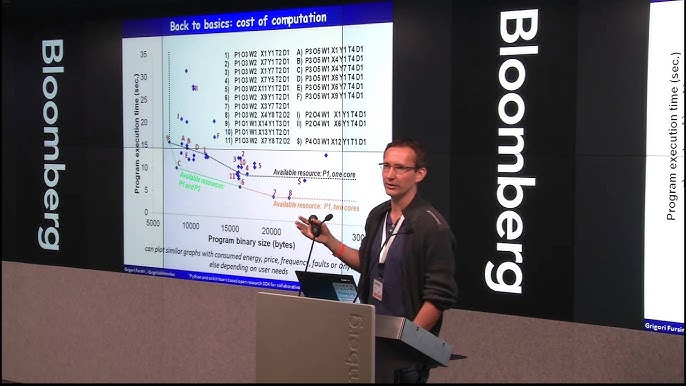
- Invited ACM TechTalk'21: Reproducing 150 Research Papers and Testing Them in the Real World.
- HPCA'25: MLPerf Power: Benchmarking the Energy Efficiency of Machine Learning Systems from Microwatts to Megawatts for Sustainable AI.
- ArXiv white paper'24: Enabling more efficient and cost-effective AI/ML systems with Collective Mind, virtualized MLOps, MLPerf, Collective Knowledge Playground and reproducible optimization tournaments.
- Invited ACM REP'23 keynote: Collective Mind: toward a common language to facilitate reproducible research and technology transfer.
- Nature Machine Intelligence'23: Federated benchmarking of medical artificial intelligence with MedPerf.
- ArXiv white paper'25: Framing AI System Benchmarking as a Learning Task: FlexBench and the Open MLPerf Dataset.
- Philosophical Transactions of the Royal Society'21: Collective knowledge: organizing research projects as a database of reusable components and portable workflows with common interfaces.
- Quantum Collective Knowledge Hackathon at École 42 (Paris): GitHub with code and photos.
- Joint presentation with Amazon at O’Reilly AI conference'18: Scaling deep learning on AWS using C5 instances with MXNet, TensorFlow, and BigDL: From the edge to the cloud.
- Presentation from General Motors about my Collective Knowledge technology: Collaboratively Benchmarking and Optimizing Deep Learning Implementations.
- ArXiv preprint'18: A collective knowledge workflow for collaborative research into multi-objective autotuning and machine learning techniques.
- ArXiv preprint'15: Towards Performance- and Cost-Aware Software Engineering as a Natural Science.
- Report of Dagstuhl Perspectives Workshop'15: Artifact Evaluation for Publications.
- ACM TRUST'14 at PLDI'14: Proceedings of the 1st ACM SIGPLAN Workshop on Reproducible Research Methodologies and New Publication Models in Computer Engineering.
- IJPP'11: MILEPOST GCC: Machine learning enabled self-tuning compiler.
- MICRO'09: Portable compiler optimisation across embedded programs and microarchitectures using machine learning.
- HiPEAC'09: Predictive runtime code scheduling for heterogeneous architectures.
- CGO'07: Rapidly selecting good compiler optimizations using performance counters.
- CGO'06: Using machine learning to focus iterative optimization.
- 2026: Program Committee Member, ACM Conference on Reproducibility and Replicability 2026.
- 2025: Program Committee Member, ACM Conference on Reproducibility and Replicability 2025.
- 2024: Co-organizer of the artifact evaluation at IEEE/ACM MICRO'24.
- 2024: MLPerf liaison at the Student Cluster Competition at SuperComputing'24.
- 2022-2024: Founder of the MLCommons Task Force on Automation and Reproducibility, donating my open-source Collective Mind technology to MLCommons and developing it as a community effort to modularize and automate MLPerf benchmarks.
- 2020-cur.: Founding member of MLCommons to accelerate ML and systems innovation.
- 2020-cur.: Founding member of the ACM SIG on reproducibility.
- 2019-cur.: Early member of MLPerf.org.
- 2017-cur.: Founding member of the ACM task force on reproducibility.
- 2015-cur.: Author of the unified Artifact Appendix and reproducibility checklist now used and extended by many ACM and IEEE conferences.
- 2015-cur.: Co-organizer of many reproducible optimization tournaments and hackathons to co-design efficient AI and ML systems powered by CK/CM technology.
- 2014-2016: Co-author of the ACM artifact review and badging policy.
- 2014-cur.: Helped to reproduce 150+ research papers from ML and systems conferences.
- 2014-cur.: Introduced reproducibility initiatives and artifact checklists at MLSys, ASPLOS, MICRO, CGO, PPoPP, and other ML and systems conferences to validate results from published papers.
- 2014-cur.: Founder and president of the cTuning Foundation, France.
- 2008-cur.: Founder and architect of cTuning.org.
- 1999-cur.: Evangelist of collaborative and reproducible research and experimentation in computer engineering.
- 2025-cur.: Founder of cTuning Labs and creator of the cTuning.ai platform, a next-generation continuation of Collective Knowledge, Collective Mind, and MLPerf automations built on cMeta/cX. Active independent platform development is currently paused while I focus on Dapple.
- 2024-2025: Founder of the Collective Knowledge Playground hosted by MLCommons.
- 2020: Founded and developed the cKnowledge.io platform with virtual MLOps, acquired by OctoAI; OctoAI was later acquired by NVIDIA.
- 2019: Prototyped the CodeReef platform with Nicolas Essayan.
- 2019: Joined Entrepreneur First, a highly selective company-building program for scientists and technologists, where I learned to build lean startups and avoid common pitfalls.
- 2015-2019: Co-founded and served as CTO of dividiti, commercializing CK-based benchmarking and optimization technologies for AI/ML systems across cloud-to-edge platforms.
- Prepared foundations to combine machine learning, autotuning, knowledge sharing, and federated learning to automate and accelerate the development of efficient software and hardware by several orders of magnitude (Google Scholar).
- Developed Collective Knowledge and Collective Mind technology, followed by the open-source Common Meta Framework (cMeta/cX), and started educational initiatives with ACM, IEEE, HiPEAC, Raspberry Pi Foundation, and MLCommons to bring my research and expertise to the real world.
- Prepared and taught an M.S. course at Paris-Saclay University on using machine learning to co-design efficient software and hardware for self-optimizing computing systems.
- Gave 100+ invited talks about my R&D.
- Received two Test of Time Awards, several Best Paper Awards, Inria Award of Scientific Excellence, and EU HiPEAC Technology Transfer Award.
- Developed foundational methodologies and tools for the automatic co-design of software and hardware from diverse vendors, enabling efficient execution of emerging workloads with optimal speed, accuracy, energy, and cost by leveraging machine learning, crowd-tuning, and crowd-learning.
- This work anticipated advances in AutoML, workflow automation, agent-based optimization, federated learning, reproducible experimentation, and cloud-to-edge AI systems optimization.
I am passionate about lifelong learning and regularly take online courses, learn emerging tools, and test new technologies to acquire new skills or refresh existing knowledge: LinkedIn certifications.
- 2019: Entrepreneur First, second cohort in Paris.
- 2004: PhD in Computer Science, focused on self-optimizing compilers and systems, with the Overseas Research Student Award, University of Edinburgh.
- 1999: MS in Computer Engineering with a gold medal / summa cum laude, MIPT.
- 1997: BS in Electronics, Mathematics, and Machine Learning, summa cum laude, MIPT.
- 2025: MCP: Build Rich-Context AI Apps with Anthropic (DeepLearning)
- 2025: AI Agents and Agentic AI with Python & Generative AI (Coursera)
- 2025: Foundations of Project Management (Coursera / Google)
- 2024: Generative AI with Large Language Models (Coursera)
- 2024: Efficiently Serving LLMs (DeepLearning)
- 2024: Intro to Federated Learning (DeepLearning)
- 2024: Quantization Fundamentals with Hugging Face (DeepLearning)
- 2023: Learning How to Learn (Coursera)
- 2021: Improving Deep Neural Networks: Hyperparameter Tuning, Regularization and Optimization (Coursera)
- 2021: Structuring Machine Learning Projects (Coursera)
- 2021: Neural Networks and Deep Learning (Coursera)
- 2021: AI for Everyone (Coursera)
- 2020: Machine Learning (Coursera)
- Founding Member, MLCommons
- Reproducibility Champion, ACM
- Member, IEEE Computer Society
- Member, HiPEAC
- 2025-2026: Prototyped the cTuning.ai platform, a next-generation continuation of CK, CM/CMX, and MLPerf automations built on cMeta/cX for reproducible experimentation, benchmarking, optimization, knowledge reuse, and full-stack co-design.
- 2025-cur.: Developed and maintained the open-source Common Meta Framework (cMeta/cX) and cMeta AOps artifacts for reusable workflows, metadata and provenance, portable tools and experiments, shared knowledge, and agent-driven automation.
- 2023-2025: Developed a prototype of the Collective Knowledge Playground to collaboratively benchmark and optimize AI, ML, and other emerging applications in an automated and reproducible way via open challenges.
- 2022-2024: Prototyped the Collective Mind automation framework using virtual MLOps scripts and MLPerf automations to run MLPerf and other benchmarks and workloads in a unified and automated manner across diverse models, datasets, software, and hardware.
- 2020-2022: Developed a prototype of cKnowledge.io to organize knowledge about AI, ML, systems, and other technologies in the form of portable CK workflows, automation actions, and reusable artifacts.
- 2018-2025: Enhanced and stabilized main CK components, including software detection, package installation, benchmarking pipelines, autotuning, reproducible experiments, and visualization.
- 2017-2018: Developed CK workflows and live dashboards for the first open ACM REQUEST tournament to co-design Pareto-efficient software–hardware stacks for ML and AI in terms of speed, accuracy, energy, and cost.
- 2017-2018: Developed an example of an autogenerated and reproducible paper with a Collective Knowledge workflow for collaborative research into multi-objective autotuning and machine learning techniques in collaboration with the Raspberry Pi Foundation.
- 2015-2025: Developed the Collective Knowledge framework (CK) to automate common tasks in ML and systems R&D, provide a common format and APIs for shared research projects, enable portable workflows, and improve reproducibility and reusability in computational research.
- 2012-2014: Prototyped the Collective Mind framework, a prequel to CK.
- 2010-2011: Helped create KDataSets (1000 datasets for CPU benchmarks) (PLDI paper, repo).
- 2008-2010: Developed the machine-learning-based self-optimizing compiler connected with cTuning.org in collaboration with IBM, Arc / Synopsys, Inria, and the University of Edinburgh.
- 2008-2009: Added the function cloning process to GCC to enable run-time adaptation for statically compiled programs (report).
- 2008-2009: Developed the Interactive Compilation Interface, now available in mainline GCC, in collaboration with Google and Mozilla.
- 2008-2013: Developed the cTuning.org portal to crowdsource training of the ML-based MILEPOST compiler and automate software–hardware co-design similar to SETI@home.
- 2009-2010: Created cBench, a collaborative CPU benchmark to support autotuning R&D.
- 2005-2009: Created MiDataSets, multiple datasets for MiBench to support autotuning R&D.
- 1999-2004: Developed a collaborative infrastructure to autotune HPC workloads, Edinburgh Optimization Software, for the EU MHAOTEU project.
- 1999-2001: Developed a polyhedral source-to-source compiler for memory hierarchy optimization in HPC used in the EU MHAOTEU project.
- 1998-1999: Developed a web-based service to automate the submission and execution of tasks to supercomputers via the Internet, used in the Russian Academy of Sciences.
- 1993-1998: Developed an analog semiconductor neural network accelerator based on Hopfield architecture, including design, simulation, data preparation, training, benchmarking, and optimization.
- 1991-1993: Developed and sold software to automate financial operations in small and medium-sized enterprises.